


Understanding ESD Challenges in Modern Laboratories & Research Institutions
In today's fast-paced scientific landscape, the demand for precision, accuracy, and contamination control has reached unprecedented heights. Laboratories and research institutions—ranging from nanotechnology centers and semiconductor cleanrooms to biotechnology labs and aerospace research facilities—deal with highly sensitive equipment and materials daily. Among the silent disruptors in these environments is Electrostatic Discharge (ESD). A sudden, uncontrolled flow of static electricity can instantly destroy microchips, alter experimental data, contaminate sterile cultures, or even ignite flammable chemical vapors.
To mitigate these risks, ESD workwear has evolved from a basic safety precaution into a critical engineering control. Modern anti-static garments are scientifically designed using advanced conductive fibers woven into high-quality textiles. These garments act as a Faraday cage, neutralizing static charges generated by friction from the wearer's movement and safely dissipating them to the ground. This comprehensive guide explores the commercial landscape, industrial trends, and deep applications of ESD workwear designed specifically for research and laboratory spaces.
Commercial and Industrial Status of the ESD Apparel Market
The global market for ESD workwear is experiencing robust growth, driven by the rapid expansion of the electronics manufacturing services (EMS) industry, pharmaceutical research, and the global push for semiconductor self-sufficiency. As governments worldwide invest heavily in domestic chip manufacturing and advanced pharmaceutical R&D facilities, the demand for specialized, certified cleanroom and ESD garments has surged.
Historically, ESD clothing was heavy, stiff, and uncomfortable, leading to low compliance among laboratory personnel. Today, the commercial landscape is characterized by a strong focus on ergonomics, breathability, and multi-functional protection. Industry leaders are no longer just selling protective gear; they are providing comprehensive contamination and static control solutions that comply with international standards such as ANSI/ESD S20.20, IEC 61340-5-1, and ISO cleanroom classifications.
Furthermore, procurement models have shifted. Procurement officers in academic and private research institutions now prioritize long-term durability, wash cycles, and lifecycle cost-efficiency. They seek out manufacturers capable of providing customized OEM and ODM solutions that align with their specific corporate identity and safety protocols.
Future Development Trends in ESD Workwear
As laboratories become more automated and integrated with AI and IoT technologies, the protective apparel sector is adapting to keep pace. Several key trends are shaping the future of ESD workwear:
- Sustainable and Eco-Friendly Fabrics: With research institutions committing to carbon-neutral goals, there is a rising demand for ESD garments made from recycled polyester and organic conductive matrices that maintain static-dissipative capabilities over hundreds of wash cycles.
- Smart ESD Garments: Future designs are incorporating flexible, wearable sensors that monitor real-time static levels on the garment surface, sending alerts to the user or facility database if the resistivity drops below safe standards.
- Nanofiber Integration: Incorporating carbon nanotubes directly into the polymer matrix of the fibers, rather than surface coatings, ensures permanent anti-static properties that do not degrade with washing or mechanical wear.
- Ergonomic & Gender-Inclusive Designs: Recognizing the diverse workforce in scientific research, manufacturers are offering tailored fits, adjustable cuffs, and lightweight, moisture-wicking fabrics that ensure comfort during long hours at the workbench.
Deep-Dive Application Scenarios in Research Environments
The operational requirements for ESD workwear vary drastically depending on the specific field of research. Here, we analyze four critical laboratory environments:
1. Semiconductor and Quantum Computing Labs
In microelectronics and quantum computing research, scientists work with nanoscale transistors and qubits that are highly sensitive to electrostatic fields. A minor ESD event can rupture thin gate oxides, leading to latent defects that cause component failure later in testing. In these environments, ESD lab coats or full coveralls are mandatory. The clothing must exhibit static-dissipative properties (surface resistance between 10^5 and 10^11 ohms) and be constructed with a continuous grid of carbon-core conductive yarns to prevent any localized charge accumulation.
2. Biotechnology and Pharmaceutical R&D
Biotech labs present a dual challenge: protecting sensitive analytical instruments (such as mass spectrometers and gene sequencers) from ESD, while simultaneously preventing biological contamination of the sample. Here, ESD garments must also function as cleanroom apparel. The fabric must be lint-free, resistant to autoclaving (steam sterilization), and capable of filtering out particles generated by the human body, all while retaining its anti-static integrity.
3. Chemical and Volatile Substance Research
In laboratories dealing with volatile organic compounds (VOCs), combustible dusts, or explosive gases, static electricity poses a severe fire and explosion hazard. A single spark can ignite a localized vapor cloud. ESD workwear in these settings must be flame-resistant (FR) in addition to anti-static. The design must eliminate any exposed metal components, such as zippers or snaps, which could act as discharge points.
4. Aerospace and Satellite Assembly Cleanrooms
Spacecraft components and satellite sensors operate in extreme environments where reliability is absolute. During assembly and testing, researchers must wear high-performance ESD garments that prevent static attraction of microscopic dust particles, which could obscure optical lenses or disrupt thermal blankets. These garments are subjected to rigorous outgassing tests to ensure they do not release volatile chemicals in vacuum chambers.
OEM and ODM: Tailoring Solutions for Specific Institutional Needs
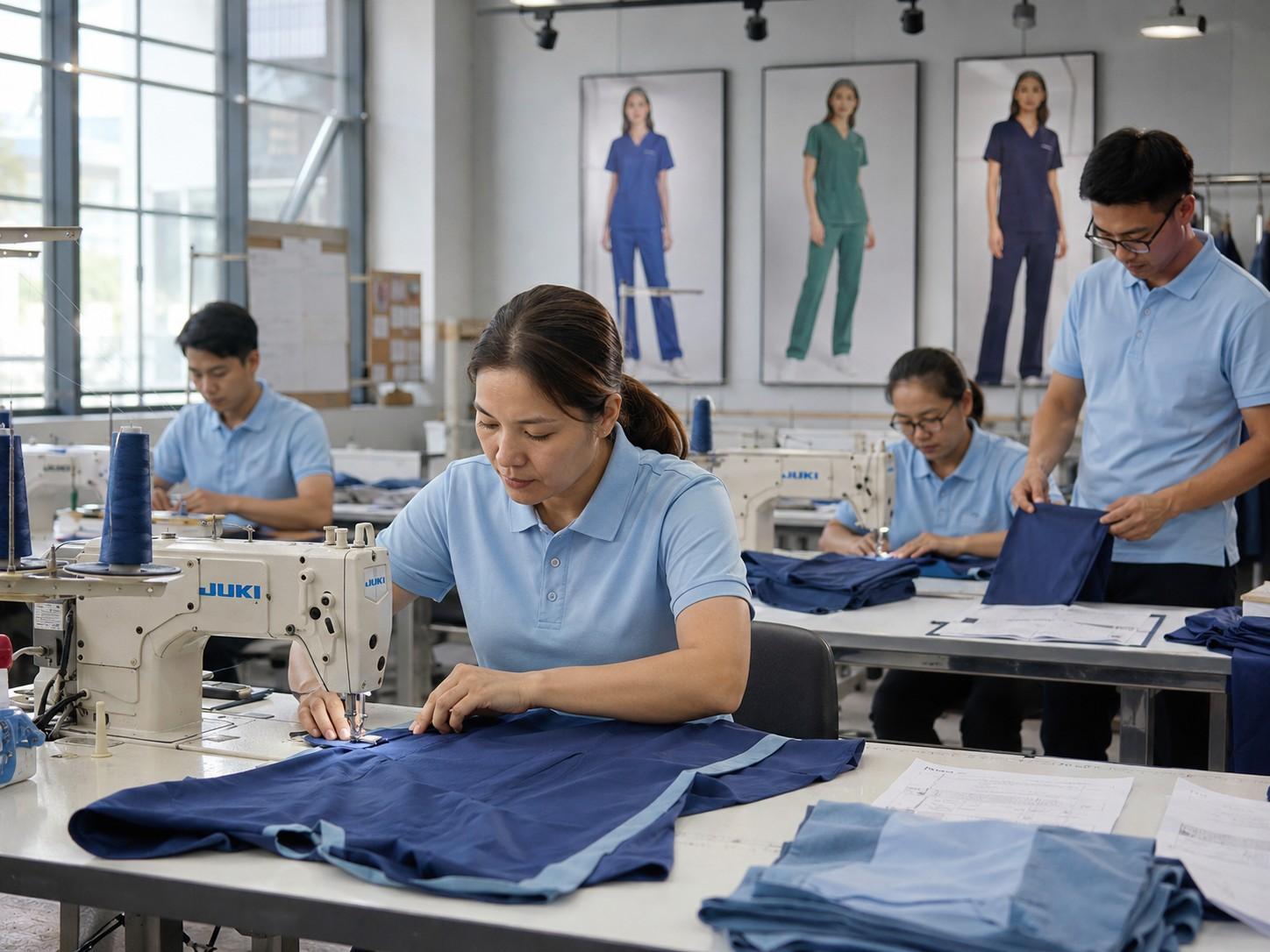
Every research institution has unique operational protocols, aesthetic standards, and safety requirements. Standard, off-the-shelf workwear rarely meets all criteria. This is where customized OEM (Original Equipment Manufacturer) and ODM (Original Design Manufacturer) services become invaluable. By collaborating directly with a specialized manufacturer, laboratories can customize fabric blends, sizing charts, pocket layouts (optimized for cleanroom tools), and branding elements while maintaining strict compliance with ESD standards.