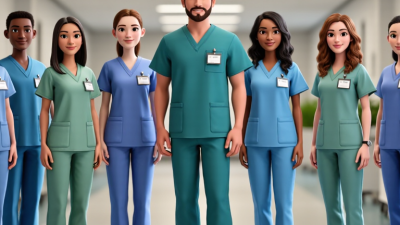
When global buyers start comparing nurse uniforms for 2026, they’re faced with a pretty practical question: will these garments hold up through a full shift? Sure, that fabric might feel super soft in the showroom, but once you’re under harsh fluorescent lights or after a few washes, it might cling, wrinkle, or restrict movement during those crucial moments with patients. Tiny details really matter—things like how deep the pockets are, if the shoulders stretch just right, or if the seams rub uncomfortably.
Maya Chen, a nurse apparel consultant, often puts it simply: “A good uniform should support you at work without making you think about it.” And honestly, that’s a pretty useful way to look at it. But of course, no one uniform is perfect for every job, climate, or body type. So, it’s worth doing your homework: try out different uniforms, look closely at the fabric specs, read the care instructions, and listen to feedback from the folks who actually wear them.
Make sure to ask how the material holds up after multiple washes. Are colors still vibrant across different batches? Is the sizing clear and consistent? Also, don’t just take the supplier’s word for it—request samples, check the stitching, test the closures, and get a sense of their production timelines and quality control processes before placing a big order. Having a shiny catalog isn’t the same as proven performance, and a low price doesn’t guarantee quality either.
The reality? Even the most careful sourcing can surprise you—perhaps a pocket sits a bit awkwardly, or the fabric feels warmer than you expected. It’s better to find those things out early on.
This guide to nurse uniforms for 2026, aimed at global buyers, dives into fabric choices, fit, function, and how to evaluate suppliers. It’s all about practical information—not empty promises. The truth is, no uniform is usually perfect. But, ideally, it should help make those demanding shifts just a little easier.
Nurse Uniforms: Definition, Purpose, and Global Market Role
Nurse Uniforms are purpose-built workwear for clinical care. They combine washable fabric, practical pockets, secure closures, and comfortable movement. A nurse may walk through wards for hours, bend beside a patient, or carry a penlight and dressing scissors. A uniform must support these repeated tasks without restricting movement. It also creates a visible professional identity. Patients can recognize care staff quickly, especially in busy hospitals.
The World Health Organization’s State of the World’s Nursing 2020 reported 27.9 million nurses globally, representing about 59% of the health workforce. This scale gives Nurse Uniforms an important role in international healthcare supply chains. Buyers must consider climate, laundering capacity, staffing levels, and workplace routines. OECD Health Statistics also shows wide differences in nurse density between countries. Demand is therefore not uniform. Lightweight fabrics may suit tropical facilities, while layered designs help colder regions. Practical details matter.
Small choices can affect daily performance. Reinforced seams, breathable panels, and deep but secure pockets can reduce frustration. Color coding may improve team recognition, but it can also confuse visitors when systems differ. That weakness deserves attention. Sustainable sourcing is increasingly discussed, yet durability should not be sacrificed for appearance. Industry buyers should compare fabric testing, wash performance, size consistency, and supplier documentation. Reports provide useful direction, but real nurses reveal what spreadsheets miss.
Key Features of Top Nurse Uniforms in 2026
Nurse Scrubs in 2026 need to balance comfort, durability, and practical design across different care settings. A useful uniform starts with breathable fabric that moves easily during long shifts. Stretch panels can help when staff bend, reach, or lift equipment. Still, too much stretch may reduce shape retention after repeated washing. Fabric performance deserves a close look.
Fit should support movement without loose cuffs or trailing hems. Adjustable waistbands and several pocket sizes help staff carry pens, small tools, and folded notes. Reinforced seams can withstand frequent laundering, especially around pockets and side splits. Check that closures stay secure and do not press uncomfortably beneath a protective layer. Small details matter.
Color consistency and clear size ranges also help global buyers assess uniform programs. Sizing can vary between suppliers, so request measurements rather than relying only on labels. A sample wash can reveal fading, shrinkage, or fabric that feels rough against the skin. These checks take time. They can prevent avoidable replacement costs, though no single fabric suits every climate or role. Teams should consider local temperatures, shift routines, and staff feedback before placing a large order.
Fabric, Comfort, and Performance Standards
2026 Top Nurse Uniforms for Global Buyers
Fabric, Comfort, and Performance Standards
For global buyers, nurse uniforms should begin with fabric evidence, not attractive color cards. In hospital use, staff may walk long corridors, lift equipment, and wash garments repeatedly. A balanced blend of polyester and cotton can provide durability, breathability, and easier care. However, the fiber ratio must match the working climate. Heavy fabric can feel protective in cold wards but uncomfortable in tropical clinics.
Comfort depends on details people notice during a twelve-hour shift. Check shoulder mobility, sleeve clearance, pocket placement, and waistband pressure. A pen should stay secure, while a phone should remain easy to reach. Flat seams can reduce rubbing around the neck and underarms. Soft fabric helps, but softness alone proves little. Some smooth materials trap heat.
Performance standards should include colorfastness, shrinkage control, seam strength, and moisture management. Buyers should request test reports and wash samples before placing large orders. Examine a garment after repeated laundering, not only when it is new. Dimensional change can affect fit across different body types and washing systems. This step is often skipped.
Sizing also deserves honest review. A single grading method may not suit every market. Regional fit trials can reveal tight hips, short sleeves, or excessive torso length. No uniform performs perfectly everywhere. That is the uncomfortable part. Procurement teams should record these failures and adjust specifications instead of hiding them. Reliable uniforms are built through measured testing, staff feedback, and careful revision.
Styles, Fits, Colors, and Functional Design Options
For global buyers, nurse uniforms must balance movement, climate, and workplace identity. The WHO State of the World’s Nursing 2020 report counted 27.9 million nurses worldwide and projected a 5.9 million shortage. Comfortable clothing matters when teams face long shifts and constant walking. Choose stretch fabric with a soft, breathable finish. A slightly curved side seam can improve movement without looking loose. V-neck and mock-wrap styles suit different body shapes, but local fitting tests remain essential.
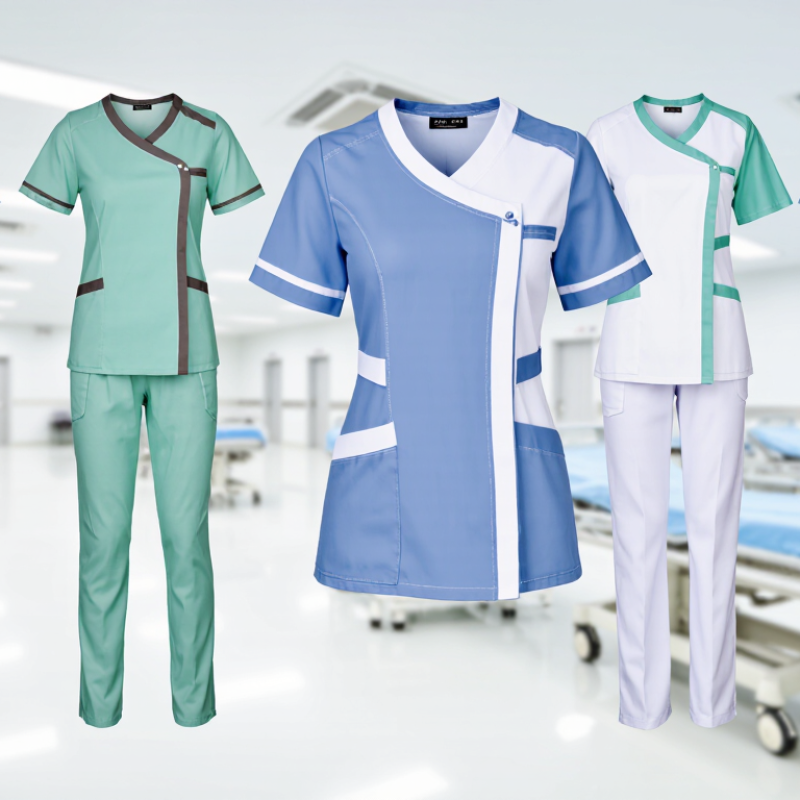
Colors should support clear role recognition. Soft blue, teal, and white often create a calm visual system, while darker panels can hide frequent marks. However, color performance changes under strong hospital lighting. Functional details include two deep lower pockets, a secure chest pocket, and bar-tacked stress points. Global buyers should request fabric weight, wash-shrinkage results, colorfastness data, and size measurements before bulk production.
Supermarket T-Shirt Uniforms may offer useful ideas for simple sizing, but nursewear needs better mobility and clinical practicality.
Tips
Test samples during a real eight-hour shift. Ask wearers to bend, reach, sit, and carry small tools. Review feedback from different heights and body types. The OECD Health at a Glance 2023 report shows wide differences in nurse supply across economies, so uniform planning cannot use one universal fit. We once assumed a relaxed cut would suit everyone; it did not. Some staff felt exposed when reaching. That small failure deserves attention, not excuses.
Safety, Hygiene, and Compliance Requirements
2026 Top Nurse Uniforms for Global Buyers
Safety, hygiene, and compliance should guide every nurse uniform decision. Appearance comes later. A practical uniform needs secure closures, smooth seams, and enough room for movement. Fabric should tolerate repeated washing without losing shape or becoming rough. Breathable materials can reduce heat during long shifts, especially in crowded treatment areas.
Choose fabrics with documented fiber content, colorfastness, and shrinkage results. Ask suppliers for test reports and care instructions. Local healthcare rules may require specific barriers, sleeve lengths, or laundering procedures. Requirements differ between hospitals and countries. Do not assume one specification works everywhere. A qualified compliance officer should review the final design before purchase.
Hygiene depends on the whole system, not clothing alone. Separate clean and used garments during storage and transport. Use controlled laundering procedures with recorded temperatures and approved detergents. This lesson also applies to Seafood Processing Uniforms, where waterproof layers, non-slip footwear, and frequent sanitation are essential. Small gaps matter. A loose cuff can collect contamination, while weak stitching can expose skin or fail during work. Some buyers focus too heavily on low price. That choice may increase replacement costs and weaken safety performance. A better review checks fit, cleaning durability, worker comfort, and supplier documentation together.
Sourcing and Evaluating Uniform Suppliers Worldwide
For 2026, global buyers are seeking nurse uniforms that balance comfort, durability, and professional appearance. Supplier evaluation should begin with fabric details, not attractive catalog photos. Request samples in several sizes. Check stretch recovery, colorfastness, seam strength, and pocket placement. A uniform may look polished online but feel restrictive during a twelve-hour shift.
Reliable suppliers provide clear production timelines, minimum order quantities, and inspection procedures. Ask whether fabric composition remains consistent between batches. Review measurement charts carefully, especially for international sizing. A difference of two centimeters can affect mobility and staff acceptance. Supplier facilities should demonstrate documented quality controls, trained workers, and traceable material records. Independent testing can verify shrinkage, pilling, and color performance. Certificates deserve verification, not blind trust.
Communication also matters. Compare response times, technical answers, and willingness to correct sample defects. A capable supplier should explain how it handles late shipments, uneven stitching, or rejected goods. Payment terms and shipping responsibilities must be written clearly. I would not select the cheapest quotation automatically. Low prices may hide weaker fabric, unstable sizing, or expensive rework. Still, supplier claims are not always enough. A second inspection is wise. My own evaluation framework would benefit from more regional data, because climate, washing habits, and clinical preferences vary widely. That weakness should remain visible during purchasing decisions.
Conclusion
Nurse Uniforms are essential professional garments designed to support hygiene, comfort, mobility, and a clear clinical appearance in healthcare environments. In 2026, leading uniforms are expected to combine durable, breathable fabrics with stretch, moisture management, easy-care performance, and reliable color retention. Practical features such as multiple pockets, secure closures, flexible waistbands, and inclusive sizing help meet the demands of nurses working long shifts.
Global buyers should also consider a wide range of styles, fits, colors, and functional designs to suit different departments and workplace preferences. Safety and hygiene remain central, with materials and construction selected to support frequent washing, contamination control, and consistent quality. When evaluating suppliers worldwide, buyers should review fabric specifications, production capacity, quality control systems, sizing accuracy, customization options, packaging, lead times, and communication standards. A dependable supplier should provide transparent documentation and stable manufacturing performance, helping healthcare organizations source uniforms that balance professional presentation, employee comfort, operational practicality, and long-term value.